How to Read Sheet Music: A First-Pass Routine
To read a short score, check the clef, key signature, meter, and tempo first. Then separate pitch reading from rhythm before combining them slowly.
What to check before playing a score
A first pass is an inspection, not a performance at full speed. Identify the range, starting note, repeated patterns, and any accidentals or rests. Notice whether the passage moves by steps or leaps. Looking ahead for a pattern reduces the need to solve every note as an unrelated puzzle.
Read a four-measure melody one layer at a time
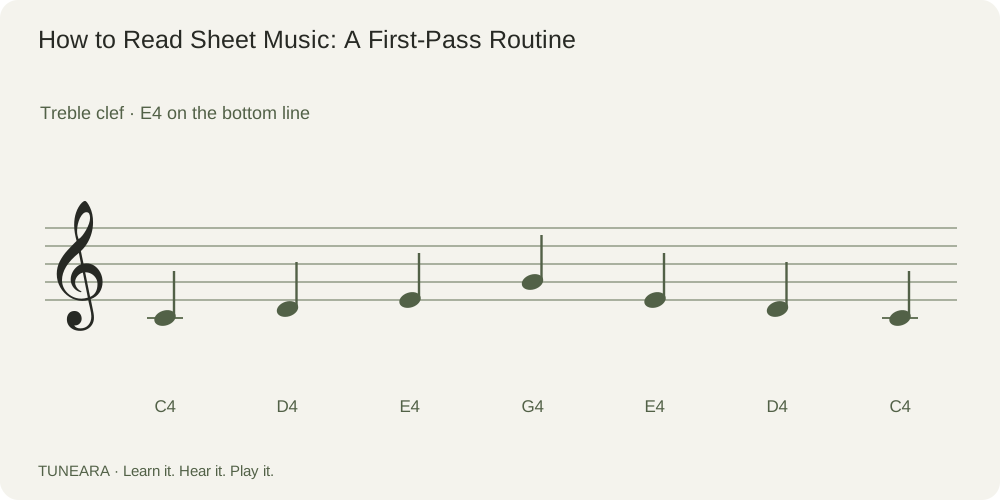
For a four-measure melody in treble clef and 4/4, find the opening pitch from a staff landmark. Count the rhythm on one repeated pitch, then name the written pitches without playing. Finally combine them at a tempo where the barlines arrive predictably. Keep the time signature’s grouping audible.
Try it in practice
Choose a two-measure example with only five neighboring notes. Clap and count it, speak the pitches, then play once without stopping. Afterward identify one mismatch and repeat just the transition that caused it. The aim is to diagnose a specific reading demand rather than to restart the whole piece after every error.
Avoid a common mistake
Do not judge reading skill only by speed. A correct pitch with the wrong duration can disrupt the phrase as much as a wrong note. Also distinguish sight-reading from detailed practice: in a sight-reading pass you may keep going, while practice allows stopping to fix a small section deliberately.
Read the visual example
What to learn next
Connect this lesson to Treble Clef Notes: Lines, Spaces, and Landmarks, then try Note Values: Whole, Half, Quarter, and Eighth Notes.
References and further learning

Get Tuneara
Your next practice
starts here.
A free tuner and metronome for iPhone and Android.