Chord Inversions: Identify the Bass Without Losing the Root
A chord inversion changes which chord member is in the bass. A C-major triad remains C–E–G whether C, E, or G is lowest.
How the bass note determines a chord inversion
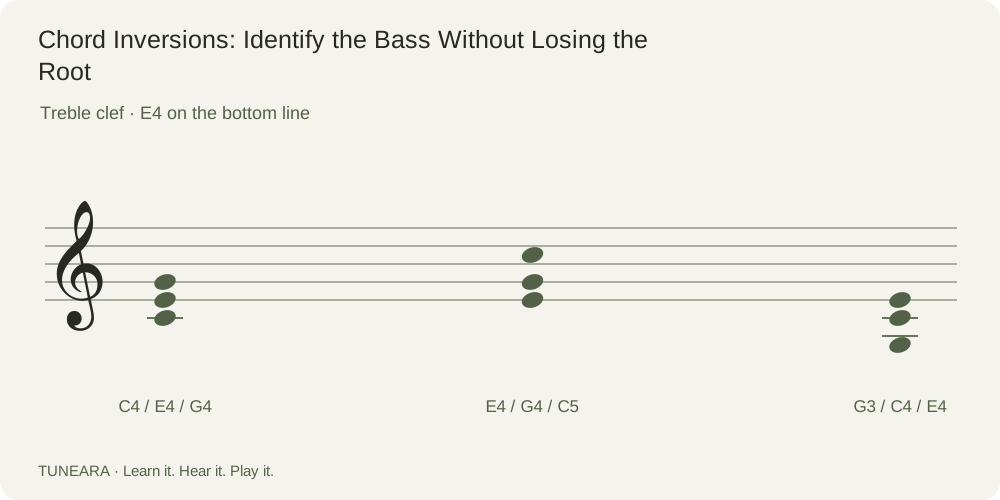
Root position puts the root in the bass. First inversion puts the third there, and second inversion puts the fifth there. The remaining members can be spaced or doubled in many ways. Inversion describes the lowest sounding chord member, not simply the order of three notes as written in a compact diagram.
Compare C, C/E, and C/G without changing the root
C–E–G is root position, E–G–C first inversion, and G–C–E second inversion. The common slash symbols C/E and C/G specify E and G bass notes. A slash bass is not always a chord member in every symbol, so read the actual bass pitch rather than treating all slash chords as ordinary inversions.
Try it in practice
Play all three close C-major positions slowly. Name the bass and then the root for each. Next, connect C major to F major using a nearby inversion so fewer voices leap. Listen to the bass motion separately from the upper notes before adding a rhythm.
Avoid a common mistake
Do not rename E–G–C as an E chord merely because E is lowest. Reorder the pitch classes into thirds to find the triad’s root. Also distinguish inversion from voicing: moving an upper note into another octave can change spacing without changing the bass member.
Read the visual example
What to learn next
Connect this lesson to Major Triads: Build Root, Third, and Fifth, then try Minor Triads: Lower the Third, Keep the Fifth.
References and further learning

Get Tuneara
Your next practice
starts here.
A free tuner and metronome for iPhone and Android.