Major Triads: Build Root, Third, and Fifth
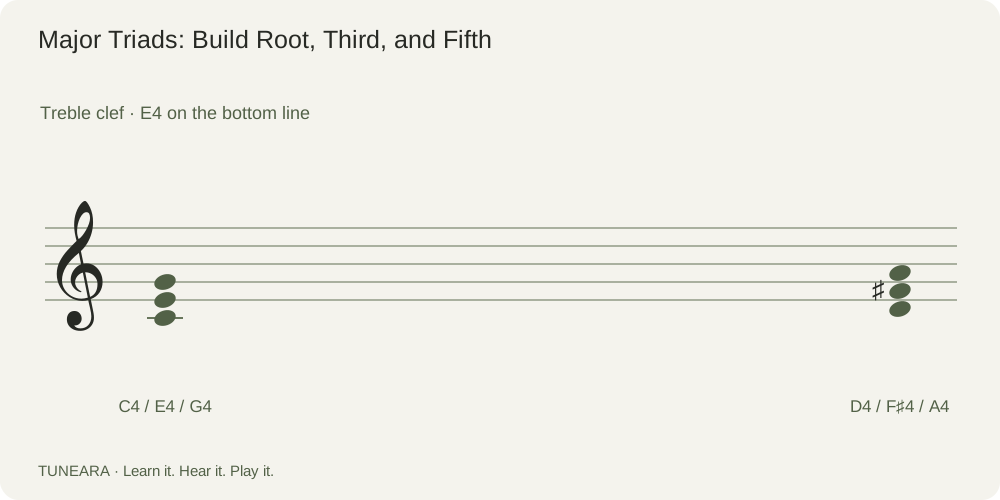
A major triad contains a root, a major third, and a perfect fifth. From C, those notes are C, E, and G.
How root, major third, and fifth form a major triad
A triad uses three distinct chord members. Doubling a member in another octave adds voices but does not change the underlying triad. In root-position close spacing, a major third sits below a minor third: C–E spans four semitones, and E–G spans three. Both measurements come from the written root-based structure.
Build a major chord and check its intervals
To build D major, count a third above D to F, then make it F-sharp for the major-third distance. The fifth is A, giving D–F-sharp–A. Keeping one letter for each stacked third prevents an enharmonic spelling from hiding the chord structure.
Try it in practice
Play C–E–G one note at a time, then together. Sing the root before the chord. Move to D and rebuild by note names rather than sliding a shape without checking its pitches. Finally play the C-major members in a different order and confirm that the chord quality stays major.
Avoid a common mistake
Do not confuse the bass note with the root in an inversion. E–G–C still contains a C-major triad. Also avoid defining major only as a happy emotion: the interval structure is precise, while the emotional character depends on register, rhythm, voicing, and context.
Read the visual example
What to learn next
Connect this lesson to Minor Triads: Lower the Third, Keep the Fifth, then try Chord Inversions: Identify the Bass Without Losing the Root.
References and further learning

Get Tuneara
Your next practice
starts here.
A free tuner and metronome for iPhone and Android.

