Minor Triads: Lower the Third, Keep the Fifth
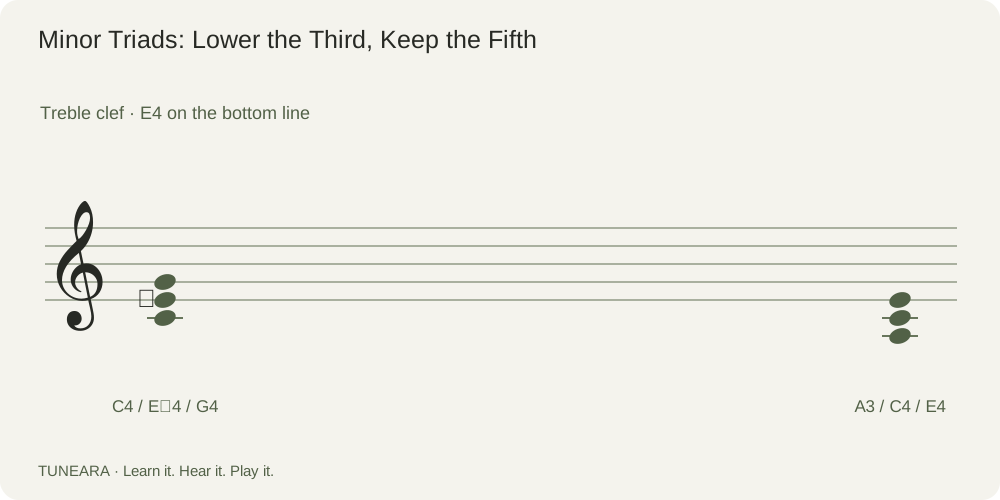
A minor triad contains a root, minor third, and perfect fifth. C minor is C, E-flat, and G.
How a minor triad differs from a major triad
The third distinguishes a minor triad from the parallel major triad. Keep the root and fifth fixed and lower the major third by one semitone. In root-position close spacing, the minor third comes first and the major third above it: C–E-flat spans three semitones, and E-flat–G spans four.
Lower the third of C major to make C minor
A minor is A–C–E. D minor is D–F–A. Their note names follow stacked thirds even though their keyboard shapes differ. The symbol Am means an A-minor triad, while A without a minor qualifier normally means a major triad in common chord-symbol notation.
Try it in practice
Alternate C–E–G with C–E-flat–G at the same volume. First arpeggiate so you hear the changed third clearly; then sound each chord together. Repeat with A major and A minor, naming the changed pitch C-sharp or C. Try singing the third above a given root before playing it.
Avoid a common mistake
Do not lower the fifth when converting major to minor; that would create another quality. A minor chord is not the same thing as an entire minor key, and a major-key progression can contain minor chords. Identify the chord’s root and third separately from the passage’s overall tonic.
Read the visual example
What to learn next
Connect this lesson to Major Triads: Build Root, Third, and Fifth, then try Chord Inversions: Identify the Bass Without Losing the Root.
References and further learning

Get Tuneara
Your next practice
starts here.
A free tuner and metronome for iPhone and Android.