Hear Major and Minor Chords by Comparing the Third
← Back to Ear training exercises
To distinguish major and minor triads by ear, compare chords with the same root and fifth. The third changes by one semitone and provides the key structural contrast.
How the third changes a chord from major to minor
Begin with root-position triads in the same register and tone color. Different inversions or doubled notes can distract from the quality when you are new to the task. Play the chord members separately first, then together. Listening for a specific interval is more dependable than relying only on an emotional description.
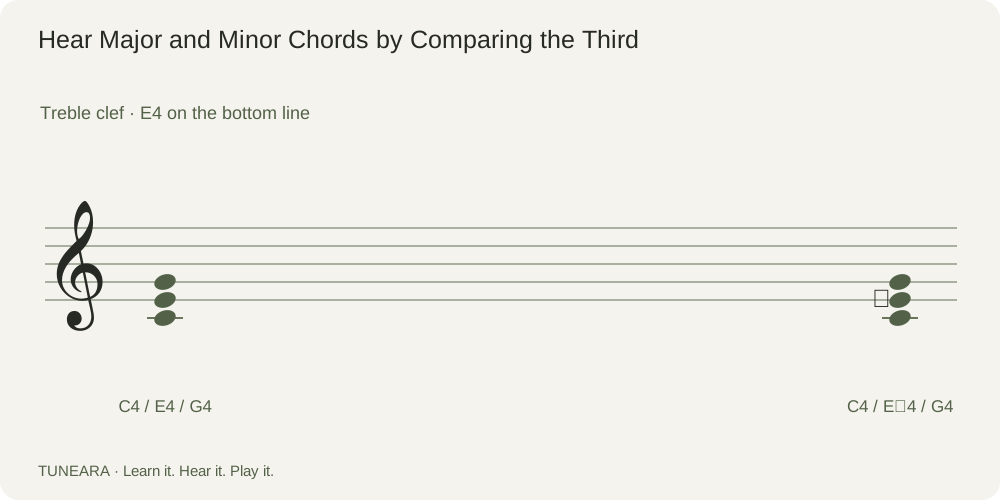
Compare major and minor triads with the same root
C major is C–E–G; C minor is C–E-flat–G. The bass C and upper G remain fixed. A major and A minor make the same kind of change, C-sharp to C. Later, use inversions so your ear learns the quality beyond one familiar keyboard layout.
Try it in practice
Play a known major triad, then a known minor triad. Sing the third above the root in each. Ask a partner to choose between the pair without changing the register and identify the quality. After checking, repeat the same comparison from another root so absolute pitch is not the only cue.
Avoid a common mistake
Do not assume a minor chord must sound sad or a major chord cheerful. Tempo, voicing, and context can change mood. Also distinguish a single chord quality from the key of an entire song; major keys contain minor chords, and minor keys can contain major dominants.
Read the visual example
What to learn next
Connect this lesson to Musical Intervals: Count Letters and Semitones, then try How to Match Pitch: Listen, Sing, and Check.
References and further learning

Get Tuneara
Your next practice
starts here.
A free tuner and metronome for iPhone and Android.