The Major Scale: Whole-Step and Half-Step Pattern
← Back to Music scales and keys
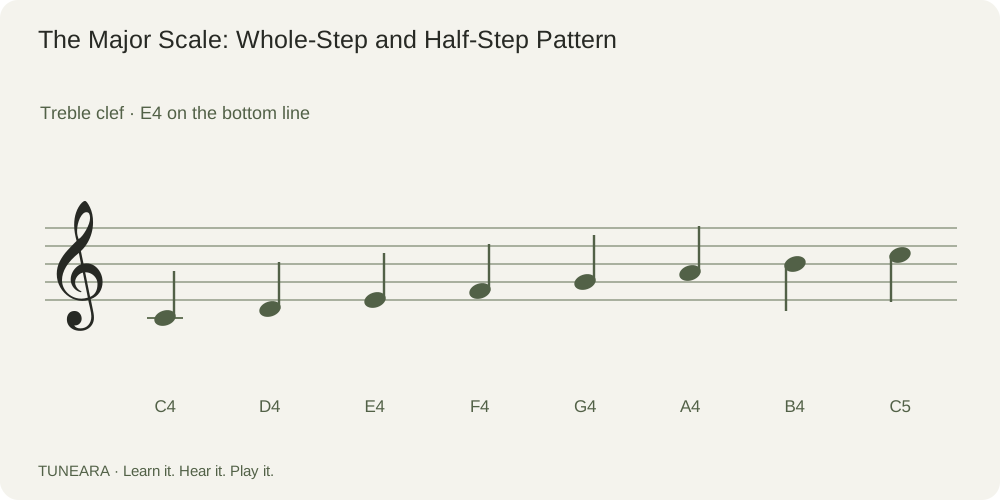
A major scale follows whole, whole, half, whole, whole, whole, half steps. Use each letter name once before repeating the tonic at the octave.
How the major scale step pattern works
The scale’s identity comes from the interval pattern, not from always using white keys. Starting the pattern on another tonic often requires sharps or flats. The half steps fall between degrees 3–4 and 7–8. Thinking in degrees helps transfer the same structure to different instruments and keys.
Build and check a major scale from its tonic
C major is C–D–E–F–G–A–B–C. Starting on G gives G–A–B–C–D–E–F-sharp–G. F must rise so that E–F-sharp is a whole step and F-sharp–G is a half step. G major still uses each letter once; G-flat would not be the correct spelling for F-sharp in this scale.
Try it in practice
Play C major slowly and pause after E–F and B–C to hear the half steps. Build G major from its tonic using the same pattern, naming the notes before checking a chart. End each version on its tonic and notice how the last half step leads into that arrival.
Avoid a common mistake
Do not memorize only a hand shape and assume the first finger always names the tonic. Identify the actual notes. A major scale is also more than a “happy” mood label: tempo, register, harmony, and performance can change the character of music using the same collection.
Read the visual example
What to learn next
Connect this lesson to Whole Steps and Half Steps: Count Musical Distance, then try Scale Degrees: Name Notes by Their Role in a Key.
References and further learning

Get Tuneara
Your next practice
starts here.
A free tuner and metronome for iPhone and Android.

