Seventh Chords: Major 7, Dominant 7, and Minor 7
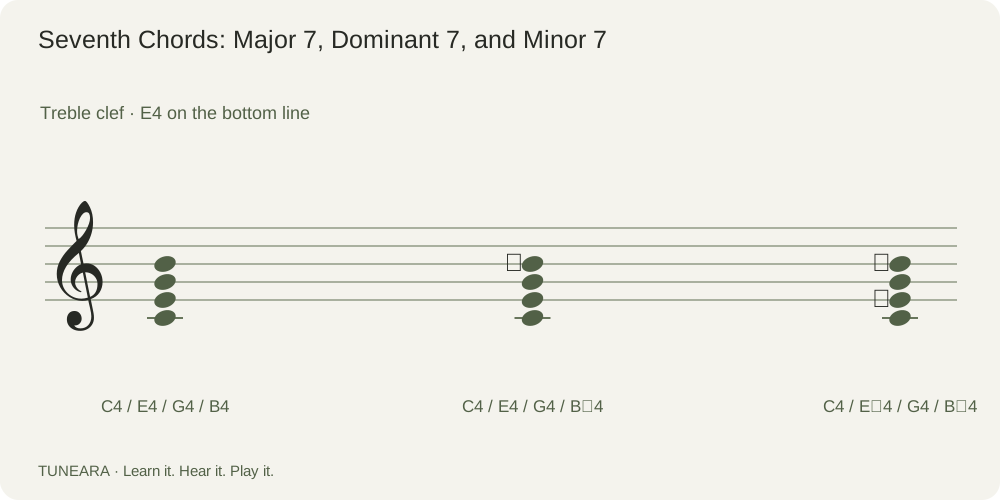
A seventh chord adds a seventh above a triad’s root. Cmaj7 is C–E–G–B, C7 is C–E–G–B-flat, and Cm7 is C–E-flat–G–B-flat.
How a seventh extends a triad
The triad quality and seventh quality both matter. Major seventh chords combine a major triad with a major seventh. Dominant seventh chords combine a major triad with a minor seventh. Minor seventh chords combine a minor triad with a minor seventh. The unqualified 7 in a common chord symbol means a minor seventh above the root.
Compare the notes in Cmaj7, C7, and Cm7
Compare Cmaj7 and C7: only B changes to B-flat. Compare C7 and Cm7: E changes to E-flat while B-flat stays. The word dominant can describe the chord quality even when a particular C7 is not functioning as the dominant of the current key.
Try it in practice
Build each example from C, naming all four members. Play the root and seventh alone, then add the third and fifth. Try G7–C to hear one common dominant resolution, noticing B rise to C and F fall to E. Keep the voicings simple so those lines are audible.
Avoid a common mistake
Do not read C7 as C major with any seventh you choose. Cmaj7 and C7 differ by a semitone in their top chord member. Other seventh qualities also exist; learn these three carefully before combining half-diminished, diminished, and altered symbols.
Read the visual example
What to learn next
Connect this lesson to Major Triads: Build Root, Third, and Fifth, then try Minor Triads: Lower the Third, Keep the Fifth.
References and further learning

Get Tuneara
Your next practice
starts here.
A free tuner and metronome for iPhone and Android.

