Transposing Instruments: Written Pitch vs. Concert Pitch
← Back to Instrument tuning guides
A transposing instrument sounds a different pitch from its written note. Read tuning targets in concert pitch and check the instrument’s specific transposition.
Why written pitch can differ from concert pitch
Written notation can let related instruments share familiar fingerings while sounding at different pitches. “Concert pitch” describes the actual sounding note. A tuner normally reports that sound unless it has an explicit transposition display setting. The instrument label, score convention, and octave all matter when comparing notation with a target chart.
Compare clarinet, alto saxophone, and guitar transpositions
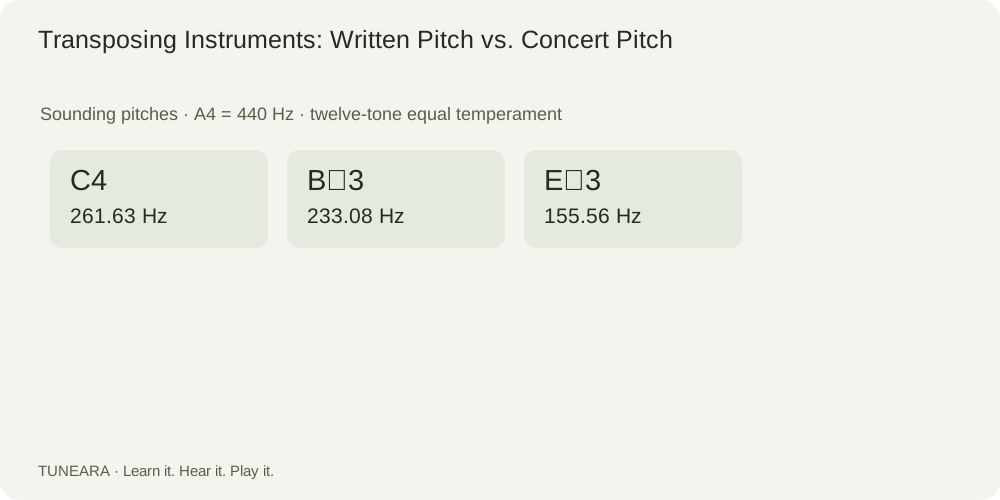
A B-flat clarinet’s written C commonly sounds B-flat, a whole step lower. An E-flat alto saxophone’s written C sounds E-flat a major sixth lower. Guitar staff notation normally sounds one octave lower than written. These are different transposition intervals, so one generic offset cannot cover every instrument.
Try it in practice
Choose one instrument and write its written C beside the sounding target, including octaves when known. Compare a short written scale with concert-pitch names before using a tuner. Ask the ensemble leader whether a part is transposed or presented in concert pitch instead of inferring it from the instrument’s usual convention alone.
Avoid a common mistake
Do not retune an instrument a whole step simply because written and sounding labels differ. The difference may be intentional notation. Also distinguish octave transposition from a change of pitch class: a guitar’s written E and sounding E have the same letter but different register.
Read the visual example
What to learn next
Connect this lesson to pitch, frequency, and cents, then try standard instrument targets.
References and further learning

Get Tuneara
Your next practice
starts here.
A free tuner and metronome for iPhone and Android.