Triplets Explained: Three Notes in the Space of Two
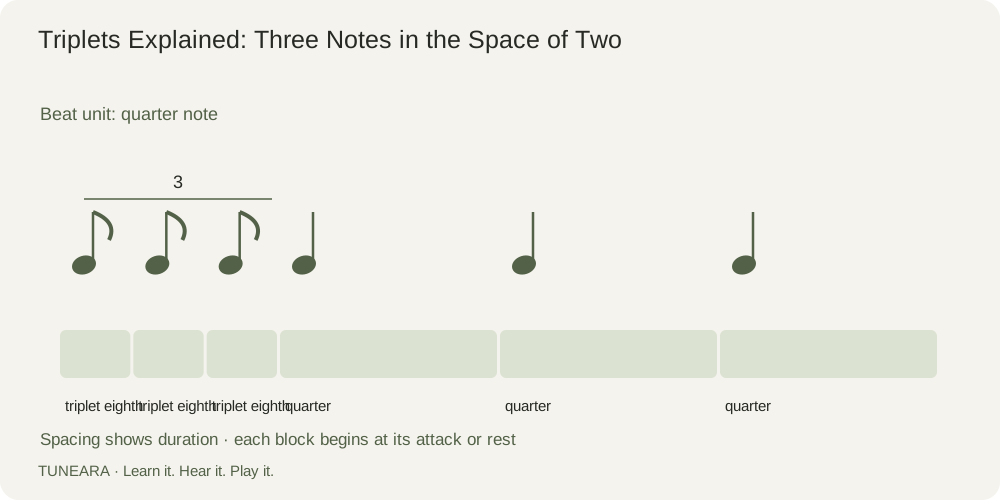
A common eighth-note triplet divides a quarter-note beat into three equal notes instead of two eighths. The bracket or beam carries a 3 to show that division.
How a triplet changes the written subdivision
A triplet temporarily changes how a written span divides. For an eighth-note triplet, three eighth-note heads occupy the duration normally taken by two eighths. Keep the larger beat unchanged. Other triplet values exist, so identify both the note value and the span rather than assuming every 3 means three notes per quarter.
Compare eighth notes, triplets, and sixteenths
Over one quarter-note beat, straight eighths divide the time in two, eighth-note triplets in three, and sixteenths in four. You can count the triplet “1-trip-let” or use another consistent three-syllable system. The syllables should be equal in duration, without making the third arrive late.
Try it in practice
Tap a slow quarter-note pulse. Speak two equal syllables per beat for one measure, then three for one measure, then return to two. Clap only after the spoken spacing is reliable. Keep the tap identical as the subdivision changes so the exercise trains division rather than accidental tempo changes.
Avoid a common mistake
Do not interpret a triplet as three hurried notes before the next beat. It fills a defined duration evenly. Swing eighths can resemble a triplet-based long-short feel, but actual swing ratios vary; the two concepts should not be treated as exact synonyms in every style.
Read the visual example
What to learn next
Connect this lesson to BPM and beat length, then try time signatures and beat grouping.
References and further learning

Get Tuneara
Your next practice
starts here.
A free tuner and metronome for iPhone and Android.