16 focused lessons
Rhythm and timing
Learn rhythm and timing with lessons on BPM, time signatures, eighth notes, triplets, and syncopation. Apply each idea with a metronome exercise.
← All learning sections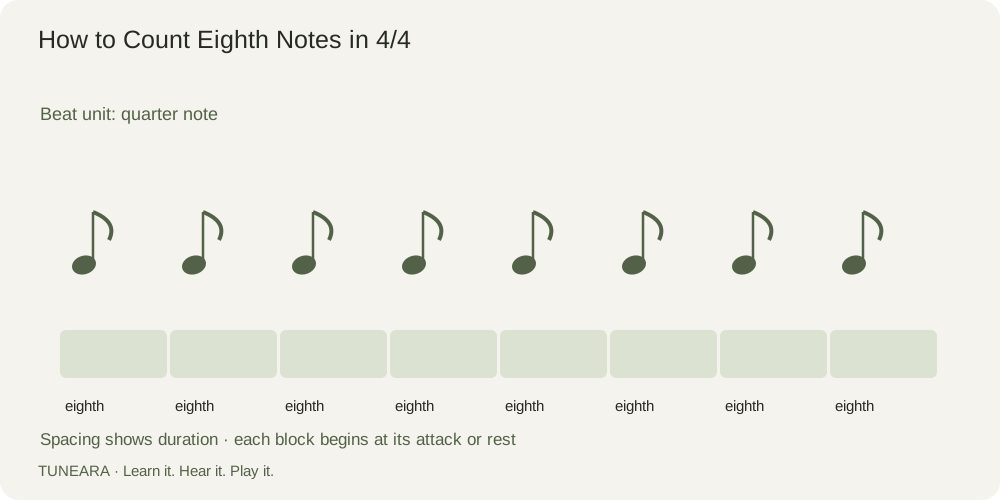 Lesson 01
BPM Explained: Tempo, Beat Length & Practice Speed
What does BPM mean in music? Learn how tempo relates to beat length, note values and metronome settings, with a simple reference table.
Read the lesson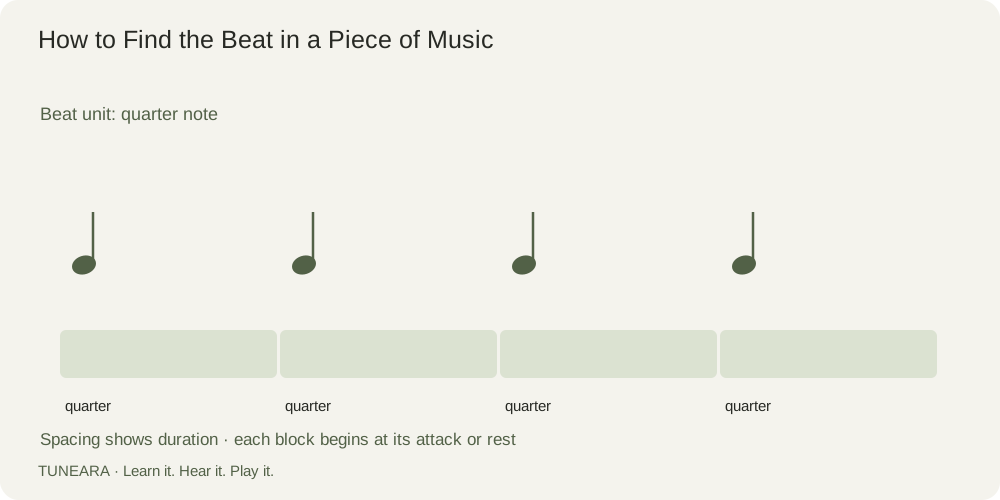 Lesson 02
How to Find the Beat in a Piece of Music
Learn how to find the beat in music using bass lines, drums, and phrasing. Practice tapping a pulse without mistaking every note for a beat.
Read the lesson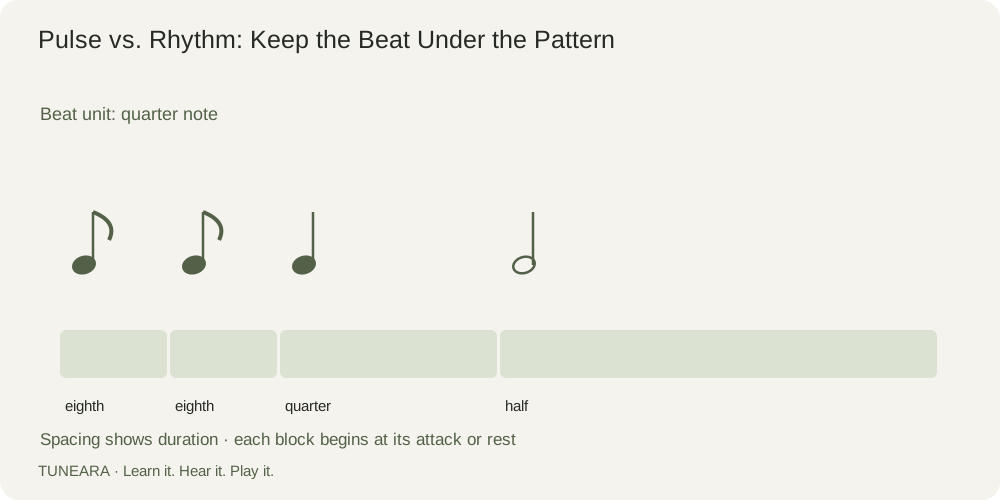 Lesson 03
Pulse vs. Rhythm: Keep the Beat Under the Pattern
Understand the difference between pulse and rhythm. Compare patterns over the same beat, then practice tapping steadily while clapping a rhythm.
Read the lesson- Lesson 04
How to Count Eighth Notes in 4/4
Learn how to count eighth notes in 4/4 with “1 and 2 and.” Place offbeats evenly, keep quarter-note clicks steady, and try a counting exercise.
Read the lesson 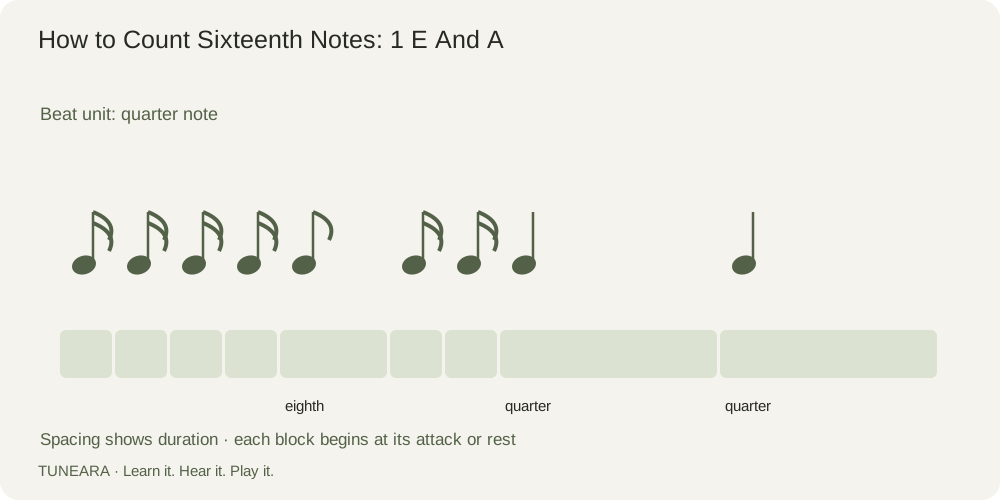 Lesson 05
How to Count Sixteenth Notes: 1 E And A
Count sixteenth notes with “1 e and a.” Learn where each subdivision falls, keep the beat steady, and practice a short spoken rhythm.
Read the lesson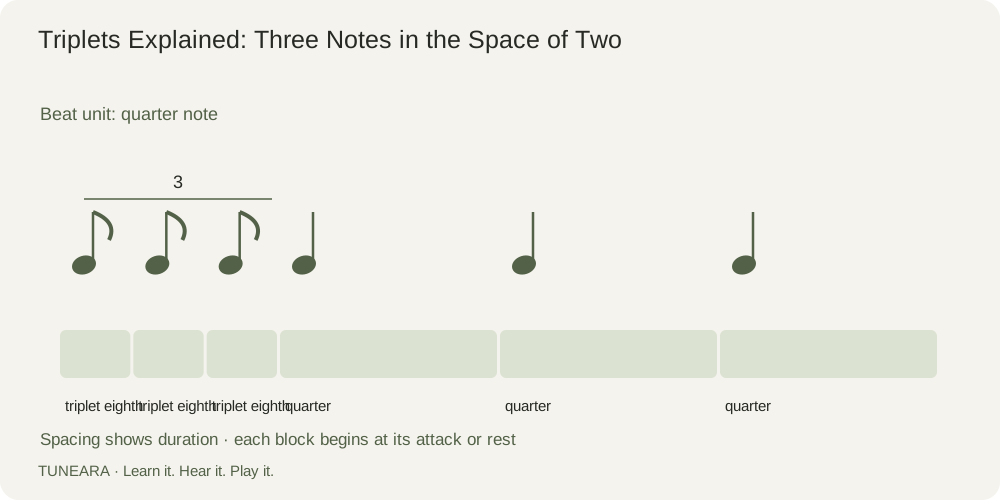 Lesson 06
Triplets Explained: Three Notes in the Space of Two
Learn what triplets mean in music and how to count eighth-note triplets. Compare two, three, and four equal notes over the same quarter-note beat.
Read the lesson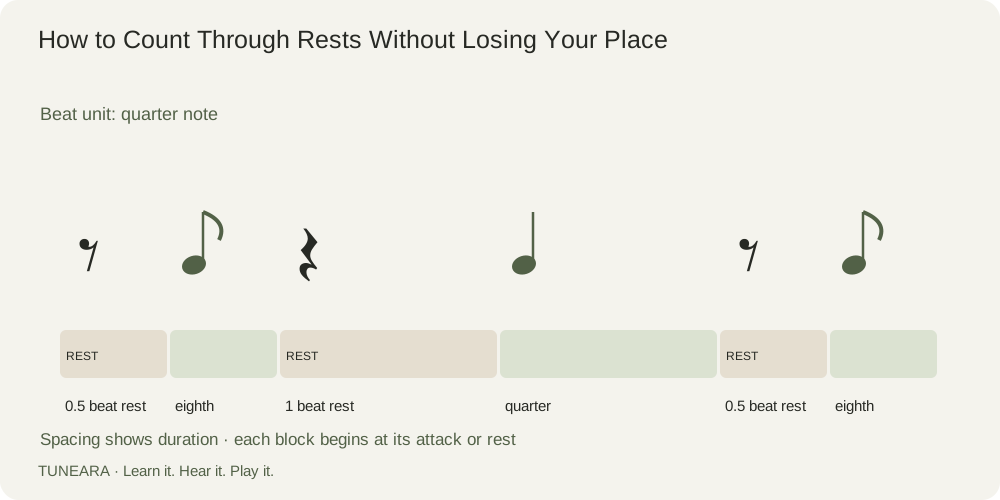 Lesson 07
How to Count Through Rests Without Losing Your Place
Practice counting through rests without losing the beat. Keep subdivisions moving during silence and place the next note at its written position.
Read the lesson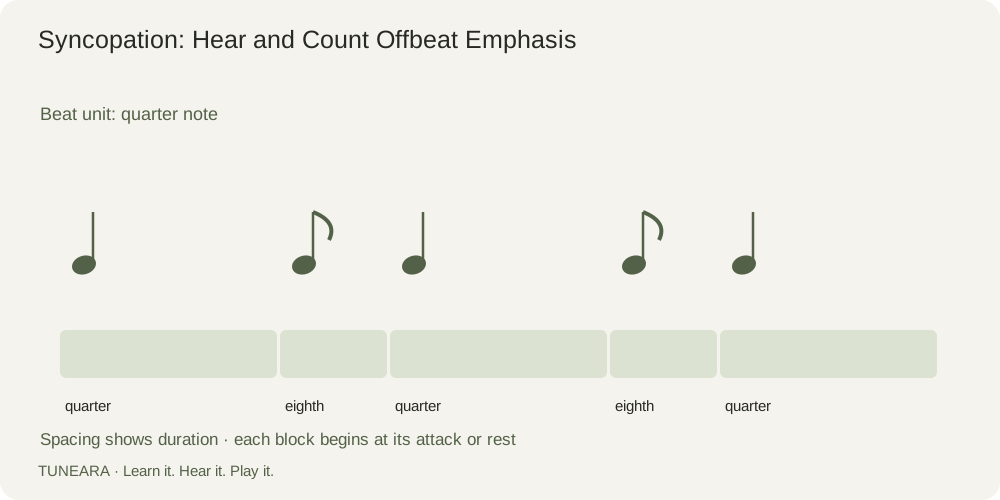 Lesson 08
Syncopation: Hear and Count Offbeat Emphasis
Learn what syncopation means with an offbeat and tied-note example. Count the underlying pulse while clapping accents between or across beats.
Read the lesson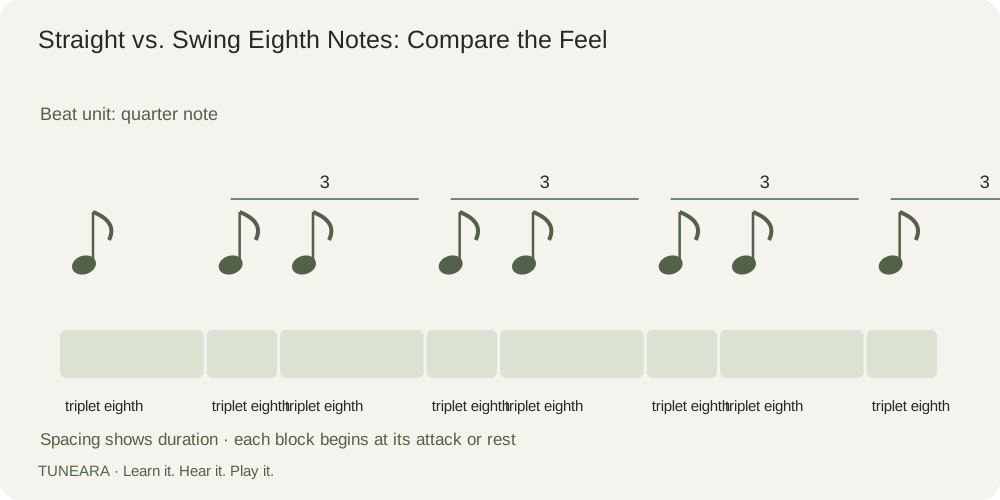 Lesson 09
Straight vs. Swing Eighth Notes: Compare the Feel
Compare straight and swing eighth notes with a clapping exercise. Understand the triplet approximation and why swing timing varies by style and tempo.
Read the lesson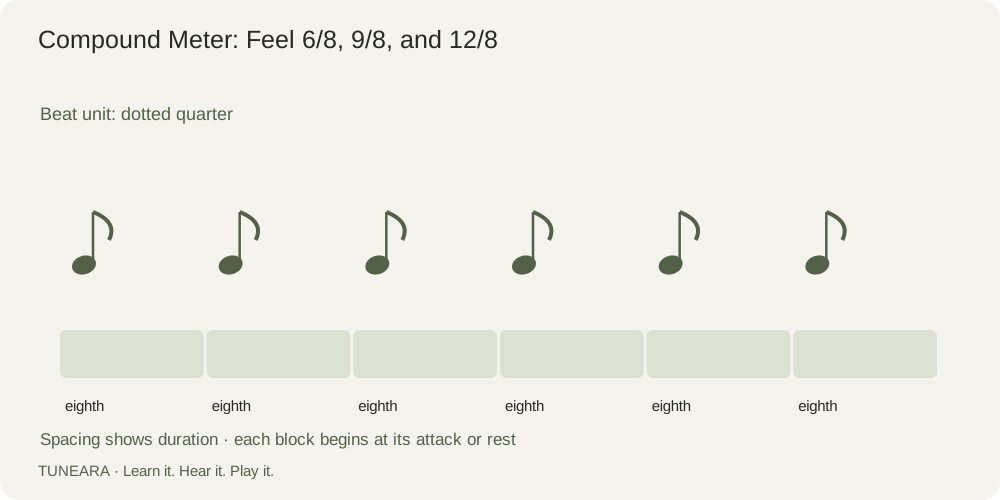 Lesson 10
Compound Meter: Feel 6/8, 9/8, and 12/8
Understand compound meter in 6/8, 9/8, and 12/8. Group eighth notes into dotted-quarter beats and practice feeling three subdivisions per beat.
Read the lesson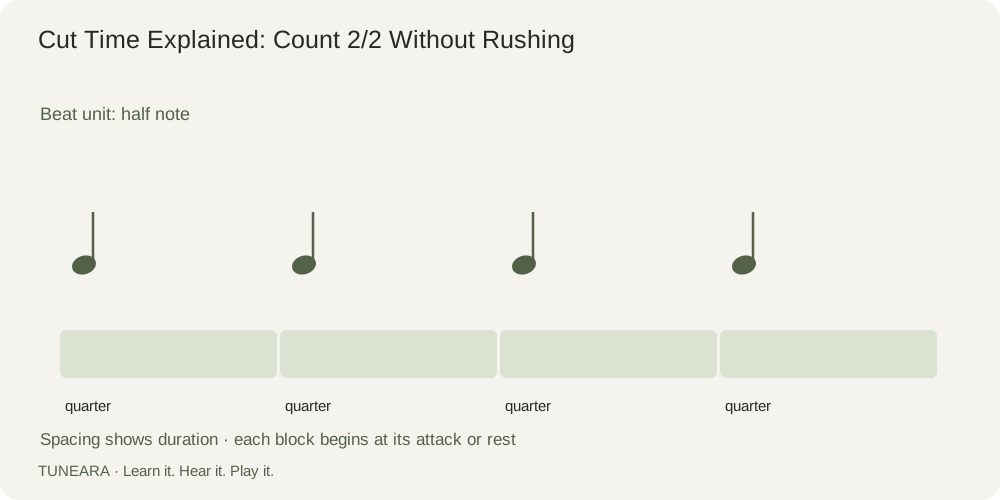 Lesson 11
Cut Time Explained: Count 2/2 Without Rushing
Learn what cut time, or 2/2, means and how to count it. Compare half-note and quarter-note tempo markings without automatically doubling the speed.
Read the lesson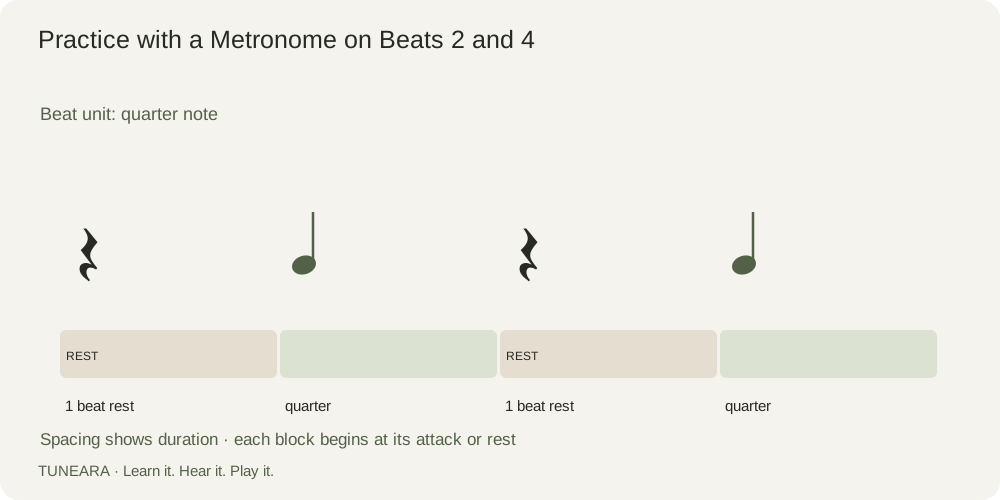 Lesson 12
Practice with a Metronome on Beats 2 and 4
Learn how to set a metronome on beats 2 and 4. Halve the quarter-note BPM, count your entry, and keep all four beats steady between clicks.
Read the lesson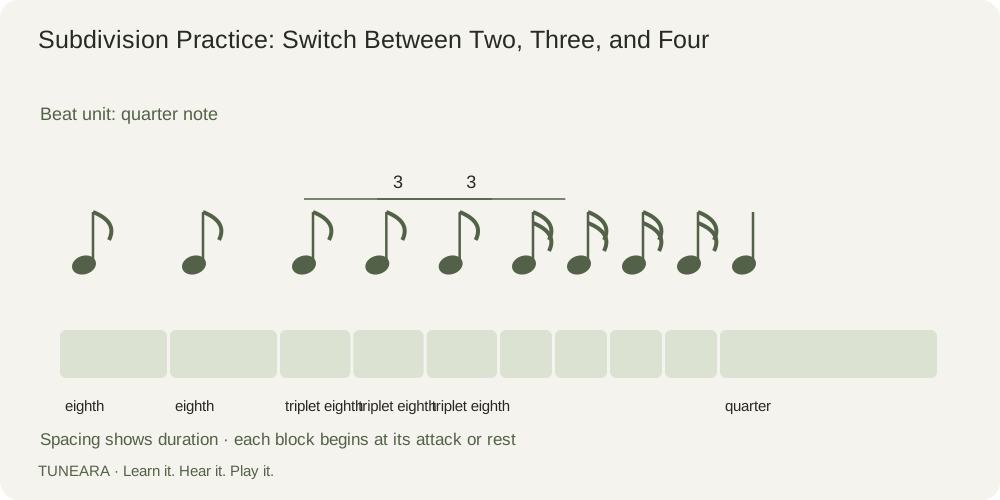 Lesson 13
Subdivision Practice: Switch Between Two, Three, and Four
Practice rhythm subdivisions by switching between eighth notes, triplets, and sixteenths. Keep one beat steady as the number of notes changes.
Read the lesson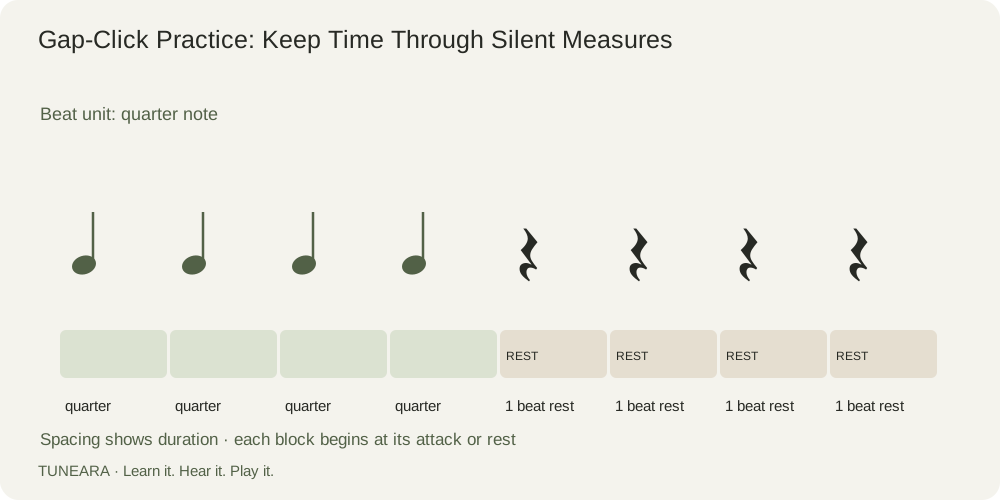 Lesson 14
Gap-Click Practice: Keep Time Through Silent Measures
Practice keeping time through silent metronome measures. Set a defined gap, continue counting, and check whether you return early or late.
Read the lesson- Lesson 15
How to Practice with a Metronome: A Simple Routine
Learn how to practice with a metronome, choose a manageable tempo, count subdivisions and build speed without sacrificing control.
Read the lesson - Lesson 16
Time Signatures Explained: Counting 3/4, 4/4 & 6/8
Learn to read and count common time signatures. Understand beats, measures and why 3/4 and 6/8 feel different despite containing six eighth notes.
Read the lesson